


lexnow
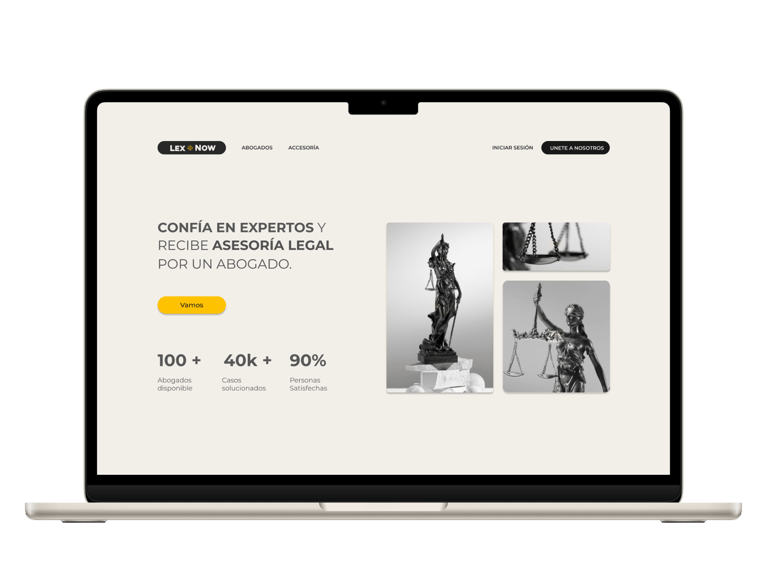
A digital platform for immediate legal assistance and real-time communication.
Role:
Design Project Lead
Timeline:
September - November 2025
Tools
Figma, Adobe Illustrator

The Problem
Middle-class individuals facing legal issues often experience stress, uncertainty, and lack of information due to the absence of a reliable and fast channel for accessing immediate legal assistance. The lack of a tool that integrates case search, professional connection, and follow-up prevents users from making timely and confident decisions.

The Objective
Design a digital platform for immediate legal assistance that connects individuals with specialized lawyers in real time, offering guidance, case follow-up, and loyalty-building tools based on a reliable, accessible, and empathetic user experience.
NEXT:
FULL CASE OF STUDY
READ TIME:
5 MINUTES
THE USER
USER RESEARCH - CRITICAL POINTS
PERSONA
PROBLEM STATEMENT
USER JOUNEY MAP
INTRODUTION
THE USER
PROTOTYPE
THE DESIGN
CONCLUSION
II

Limited Access
Users do not have reliable digital channels to receive immediate legal guidance.
Lack of Trust
Emotional Disconnection
Most searches are based on informal recommendations or unverified websites.
The current process generates anxiety and a sense of abandonment due to the lack of guidance and follow-up.






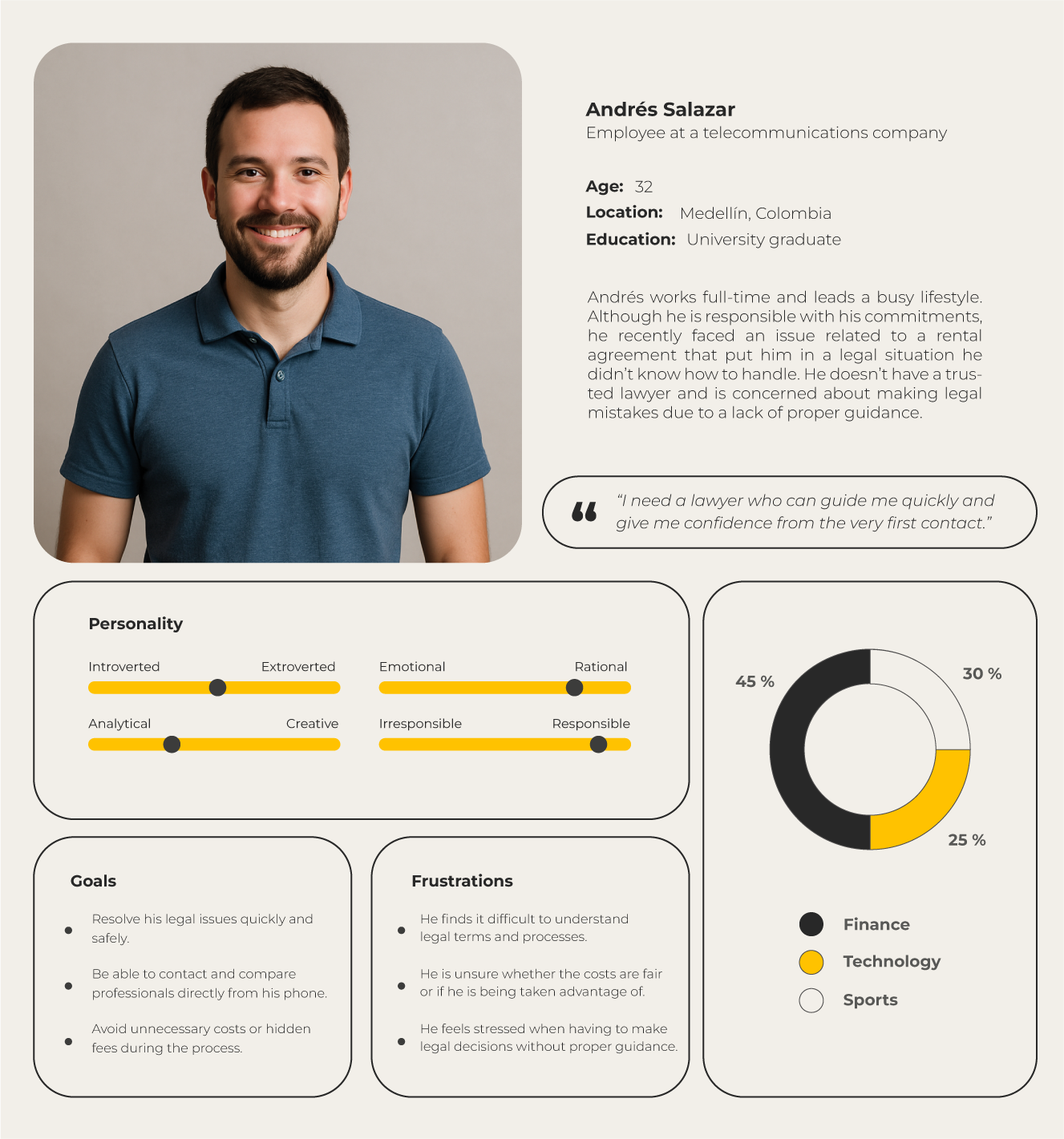
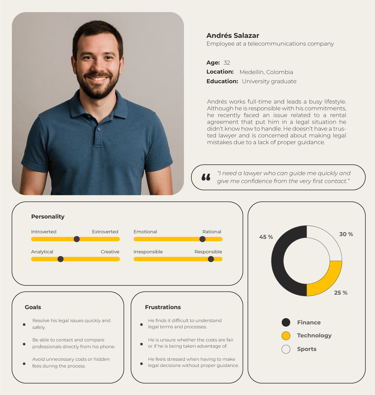
Persona: Andres
Problem Statement
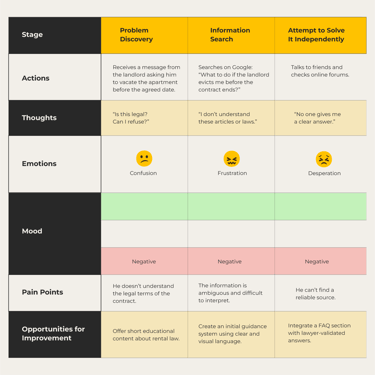
Andrés lives alone in an apartment in Medellín, which he has been renting for the past two years. Recently, his landlord informed him that he needed to vacate the property before the agreed date, citing personal reasons. However, Andrés had already paid the full month’s rent and had a valid contract with clauses he did not fully understand.
When he tried to clarify the situation, the landlord refused to return the security deposit and threatened legal action if Andrés did not vacate the apartment within a few days. Andrés felt confused, stressed, and unsure of how to proceed. He searched on Google for information about his rights as a tenant, but encountered legal terminology that was difficult to understand and contradictory answers.
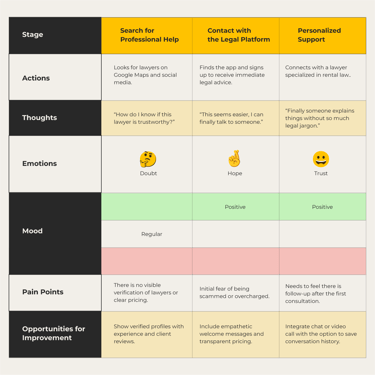
Frustrated by the lack of clarity and not knowing any trusted lawyer, he began to think there should be a faster and safer way to speak with a legal professional at the exact moment he needs it—without in-person appointments or long waiting times.
User Journey Map
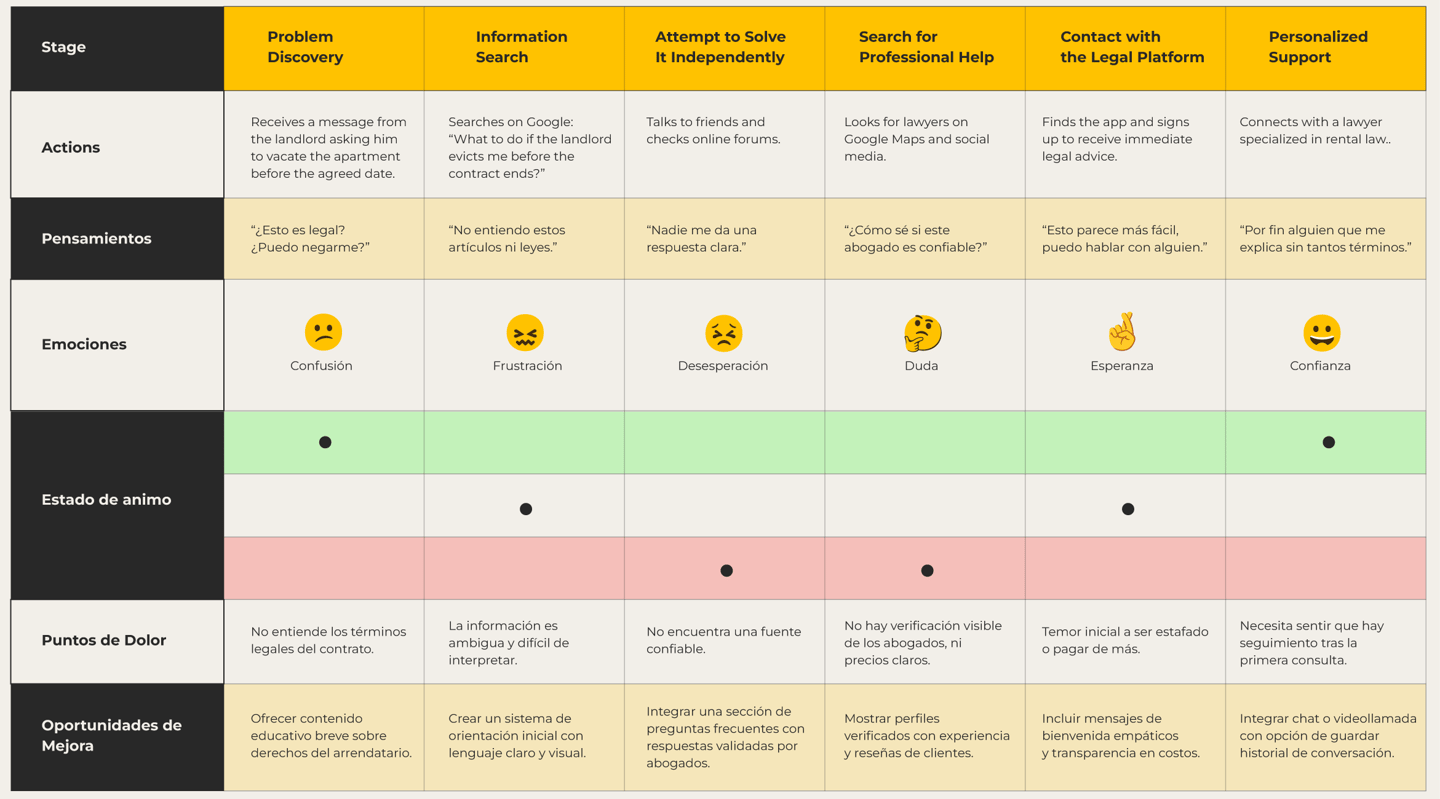
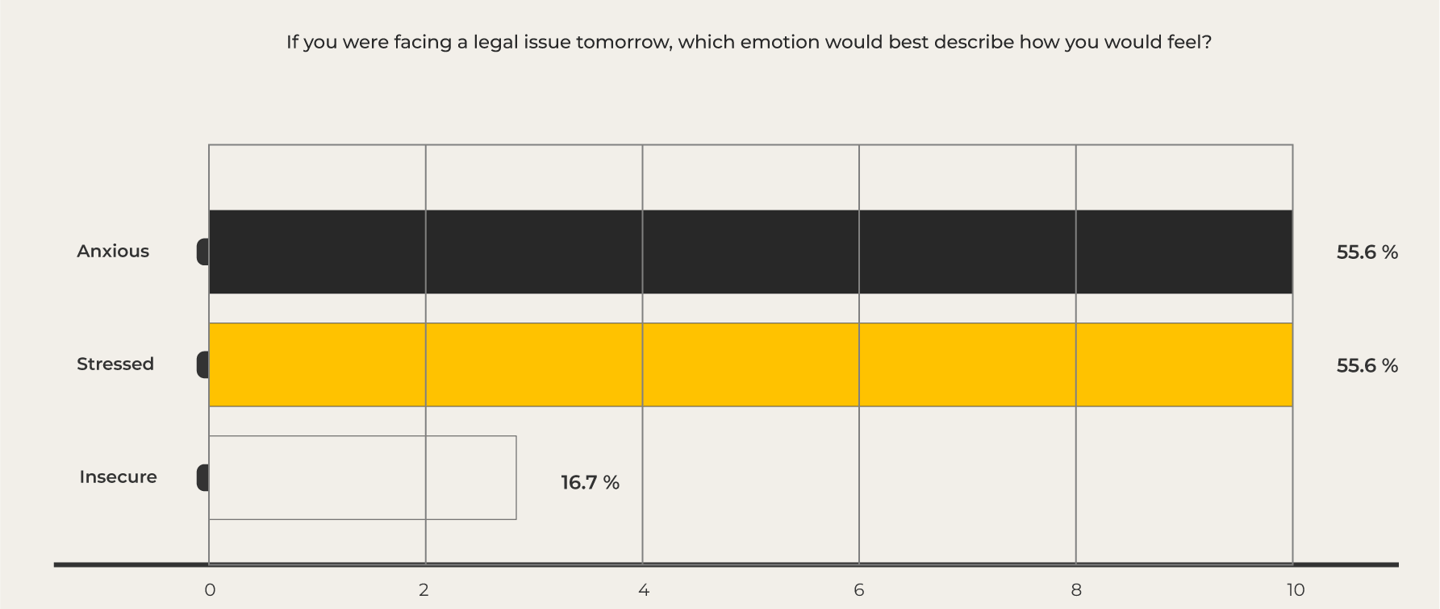
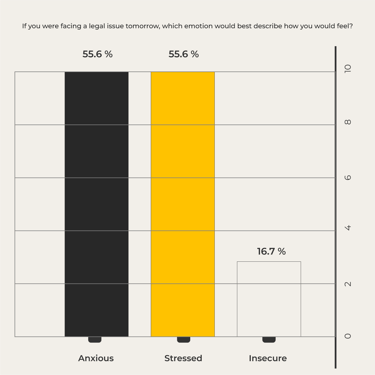
Additionally, aspects related to trust, the urgency of receiving legal assistance, and predominant emotions such as stress, anxiety, and insecurity were explored—feelings that emerged repeatedly among participants.
User Research
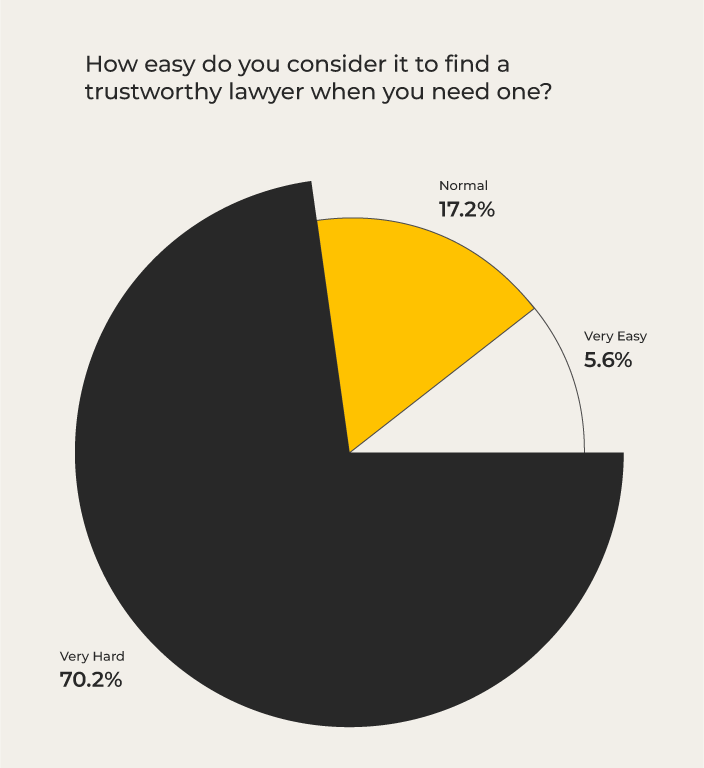
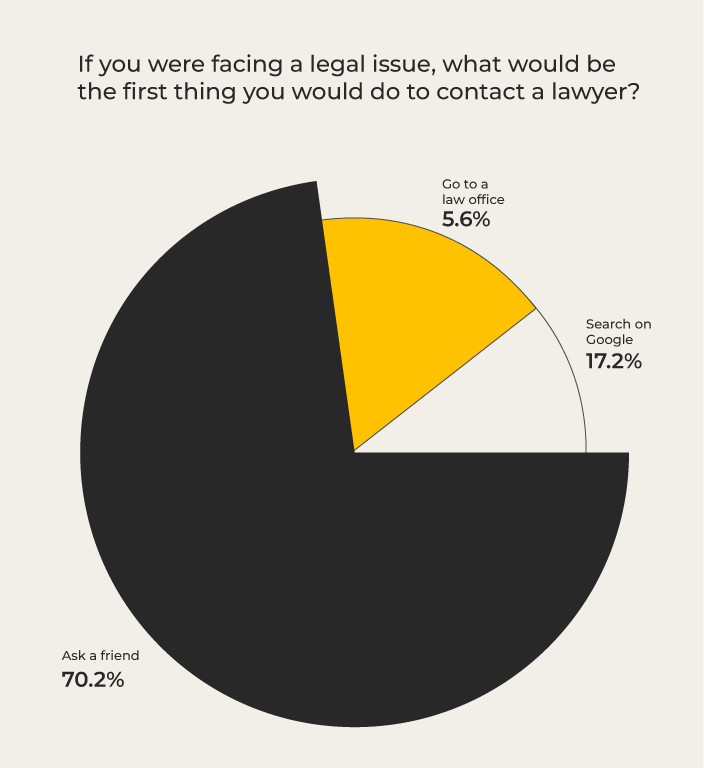
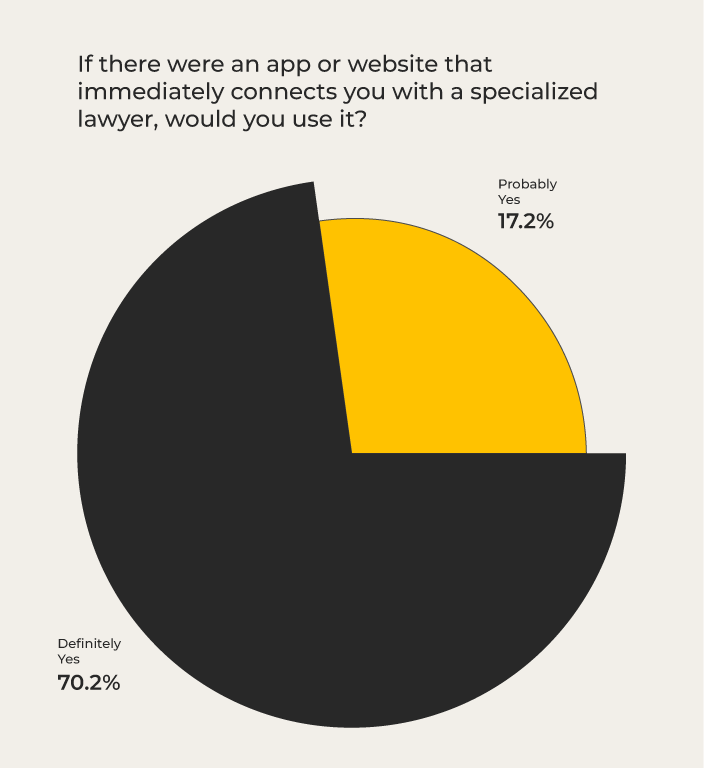
As part of the research process, a survey was conducted targeting middle-class individuals in order to understand how they react and what actions they take when facing an unexpected legal situation.
The goal was to identify real behaviors, emotions, and needs to validate the problem and guide the design of a digital solution that connects users with specialized lawyers in an immediate way.
The survey included 20 participants of different ages and occupations, which allowed for a broad understanding of trust perception, current channels used to seek legal help, and interest in technological solutions.
The findings show that middle-class individuals perceive legal processes as complex and stressful, and tend to trust third-party recommendations more than digital searches. However, they show a strong willingness to use a technological platform, as long as it conveys trust, speed, and human support.
Survey Results
Critical Points


PROTOTYPE
SITE MAP
PAPER WIREFRAMES
LOW-FIDELITY PROTOTYPE
USABILITY STUDY
INTRODUTION
THE USER
PROTOTYPE
THE DESIGN
CONCLUSION
III
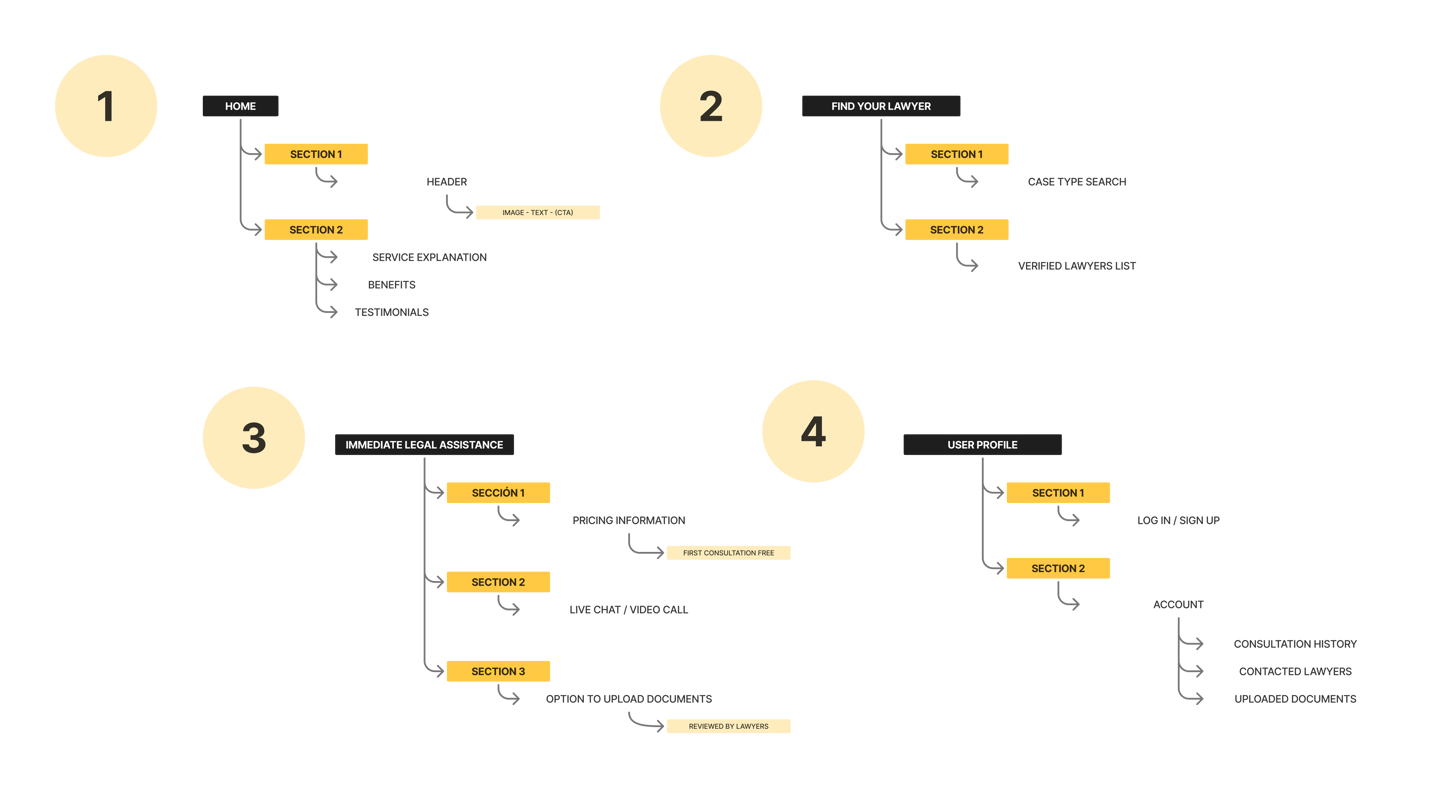
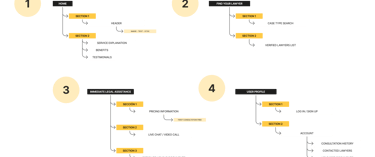
Site Map
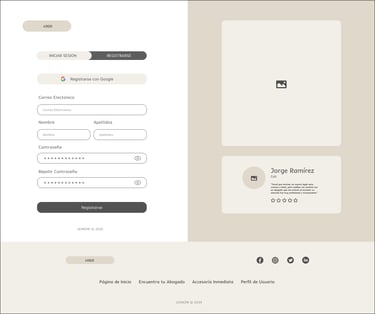
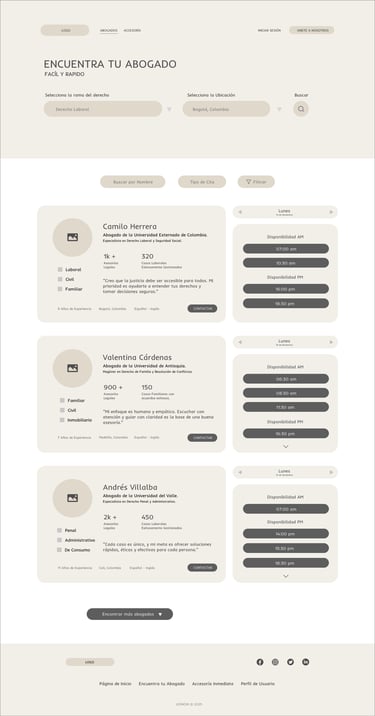
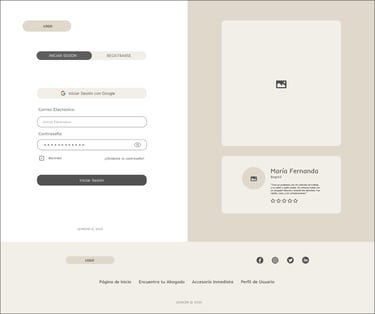
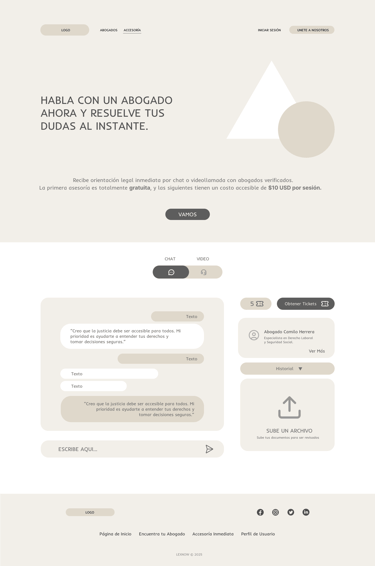
Low-Fidelity Prototype
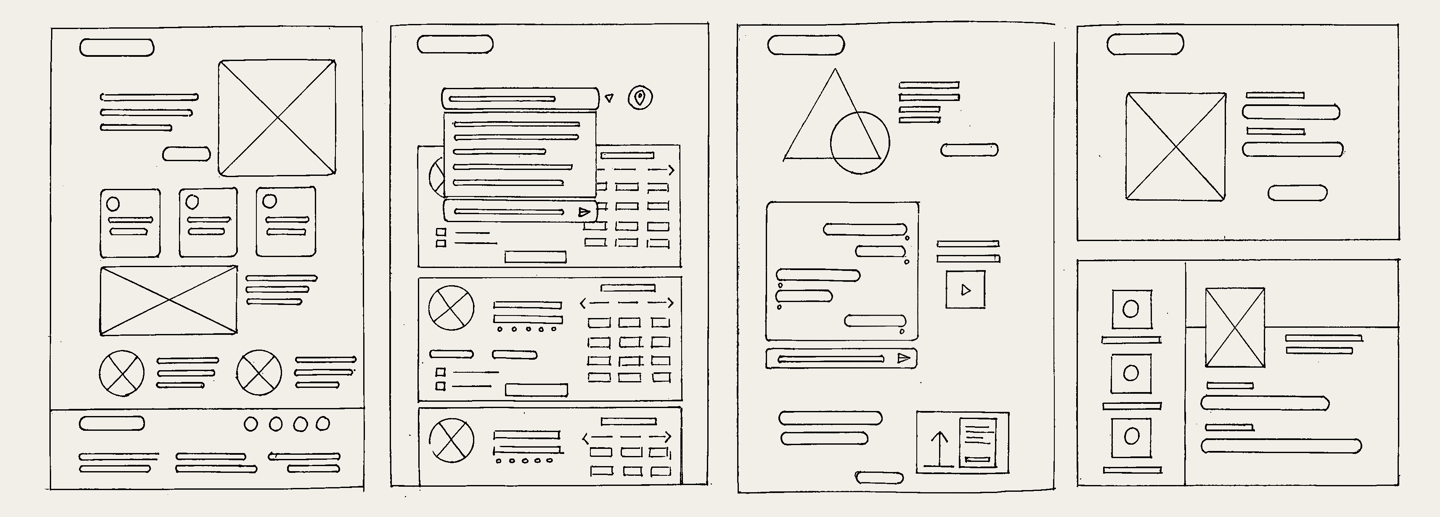
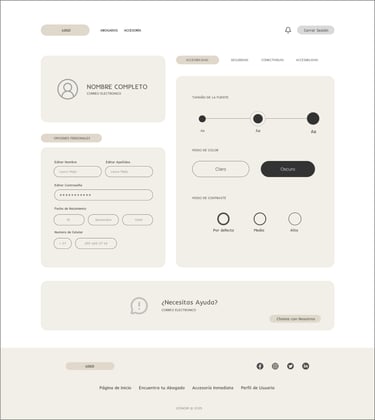
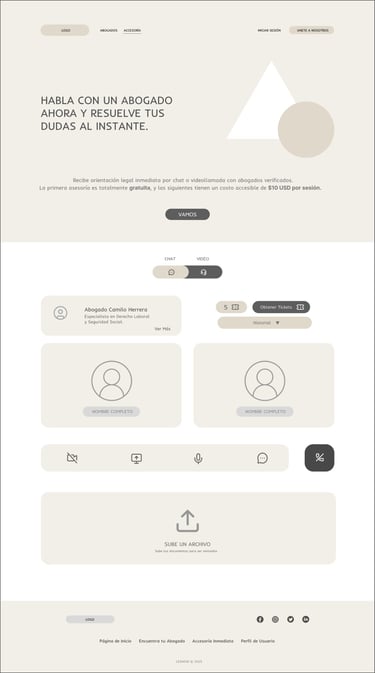
Paper sketches were created for the main screens of the website, taking into account the identified pain points, especially related to accessibility and information visualization.
Subsequently, the wireframe structure focused on optimizing the user experience by making access to lawyer profiles and immediate legal assistance clear and efficient, reducing unnecessary steps and avoiding tedious processes that could generate stress.
Paper Wireframes
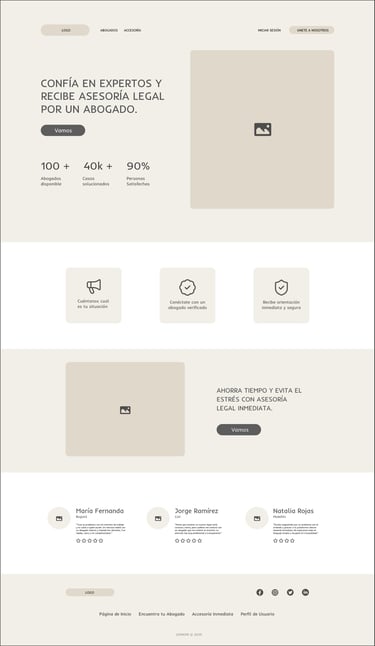
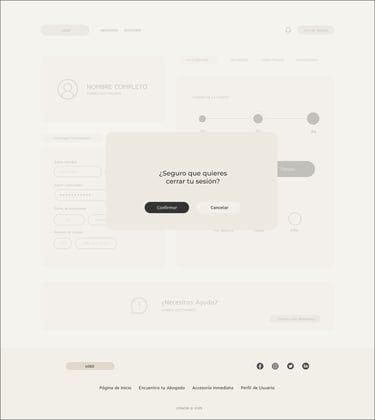
To create the low-fidelity prototype, I designed all the website screens in low fidelity and connected them to build the main user flow within LexNow.
I then consulted legal professionals regarding the information structure and flow, from whom I received valuable feedback. This input was carefully considered and implemented to improve usability and reduce friction points identified during the research phase.
Usability Studie

Type of study:
Unmoderated

Participants:
5 participants

Location:
Colombia, remote
These were the main findings identified during the usability study:
Area of Law Selection
Many people do not know exactly which area of law they need, which becomes an additional obstacle.


Pricing and Plans
A screen that clearly allowed users to understand the costs of each service was not implemented.
User Type
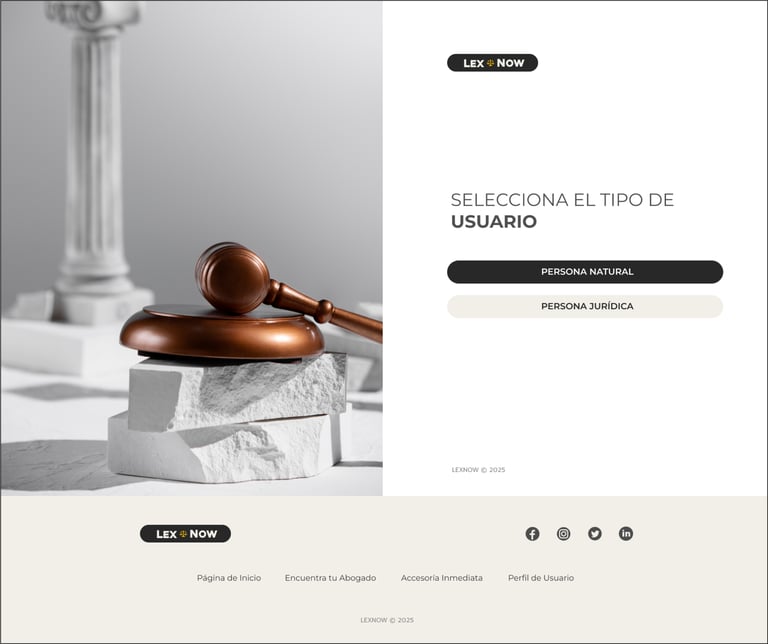
There was no clear differentiation between user types, such as individuals and companies.
THE DESIGN
HIGH-FIDELITY PROTOTYPE
IMPROMEVENTS
MOCKUPS
INTRODUTION
THE USER
PROTOTYPE
THE DESIGN
CONCLUSION
IV
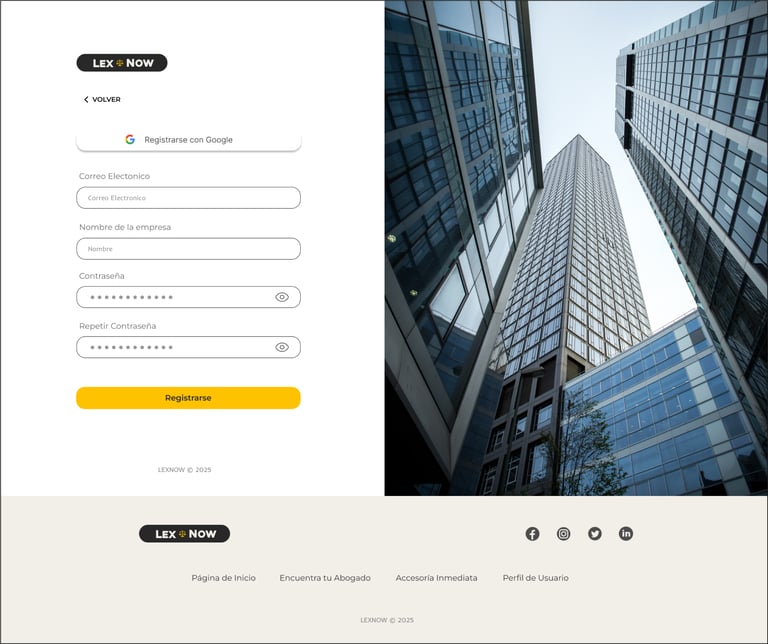
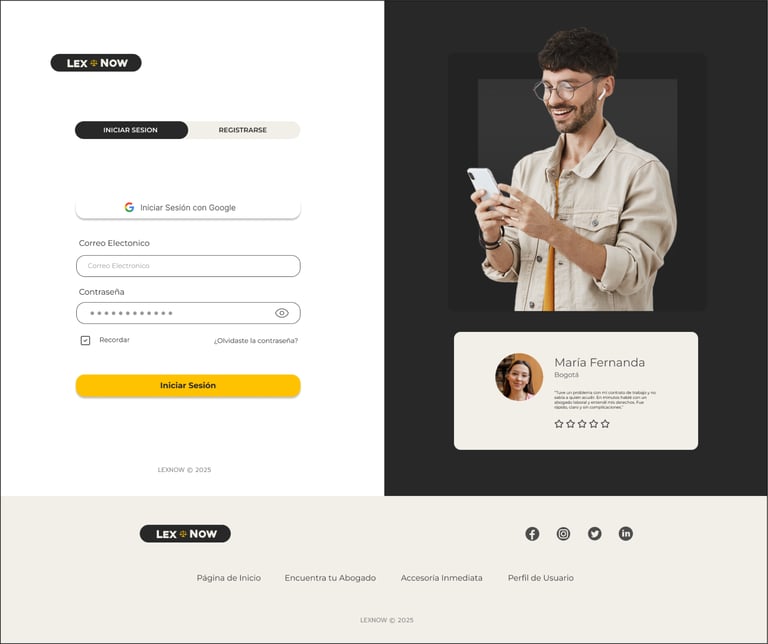
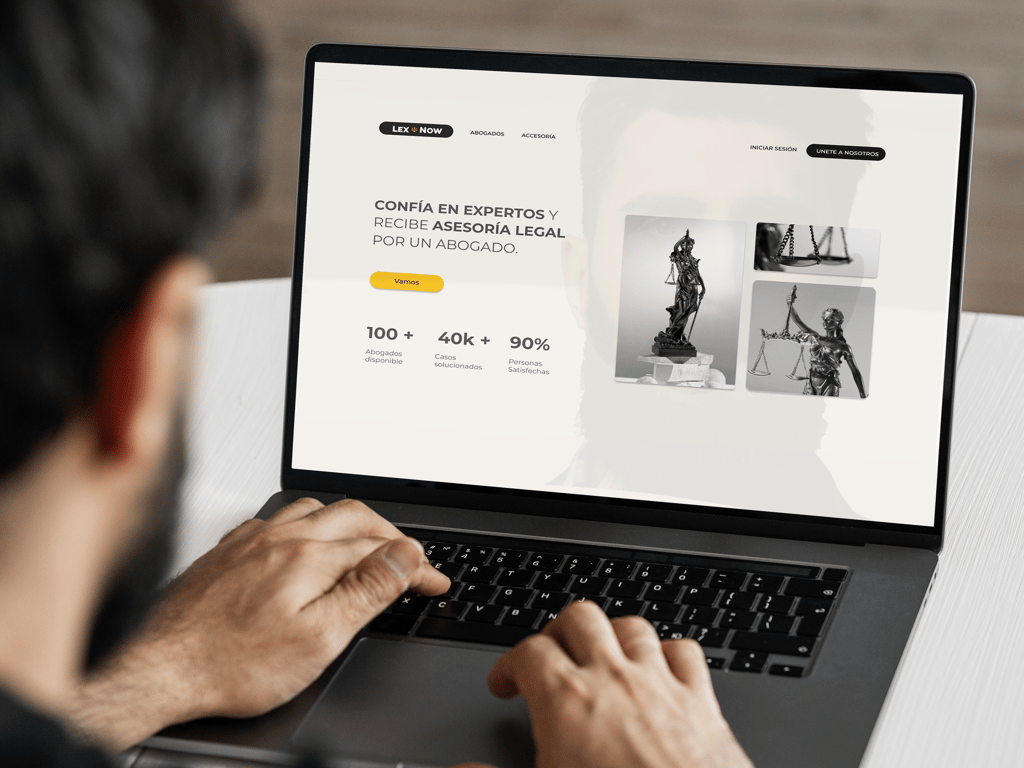
Mockups
Improvements
An option was added that allows users to describe their case in a text field, enabling an AI-powered system to identify the appropriate area of law and recommend the most suitable lawyers for the situation.
High - Fidelity Prototype
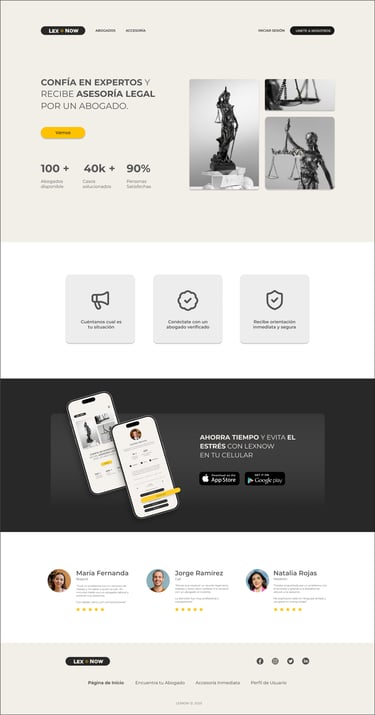
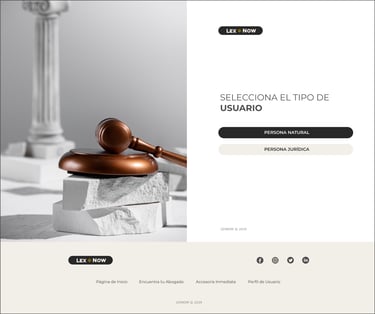
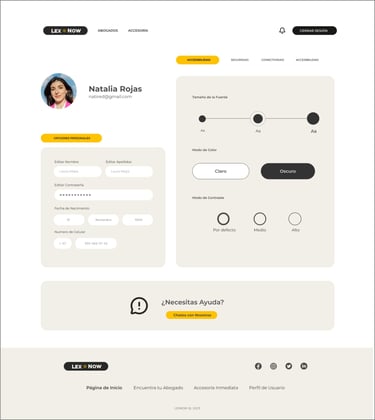
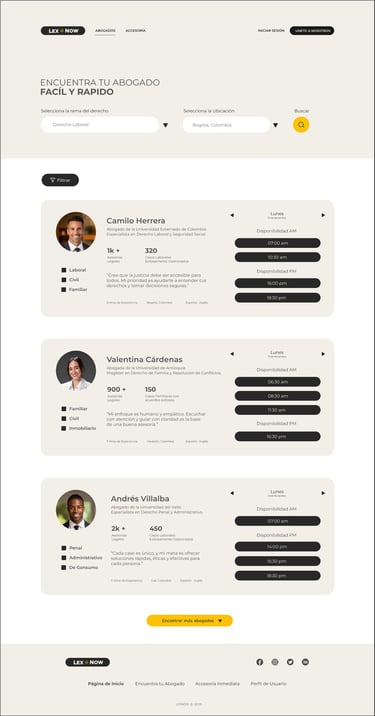
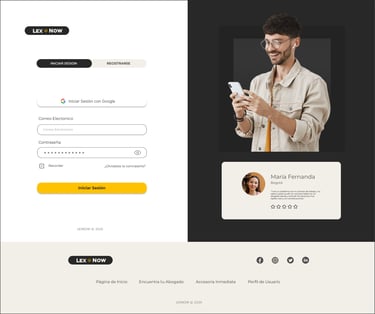
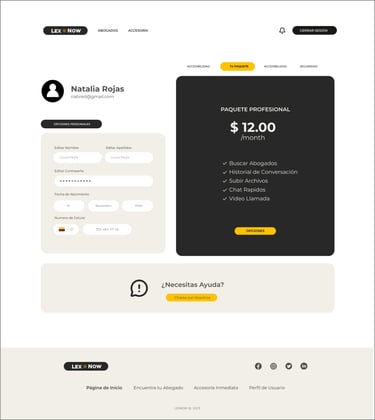
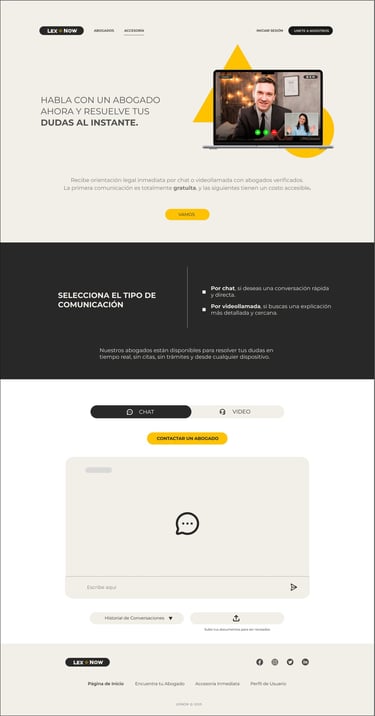
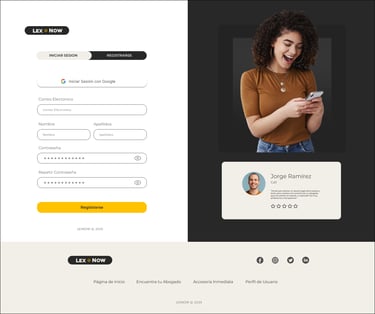
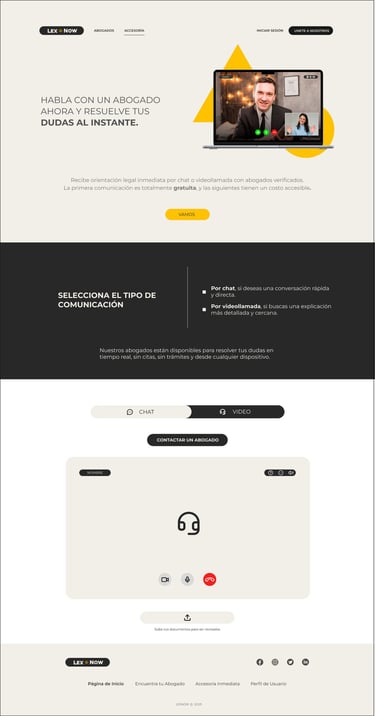
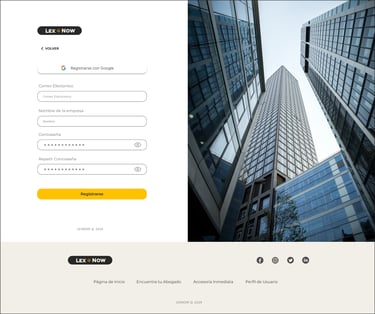
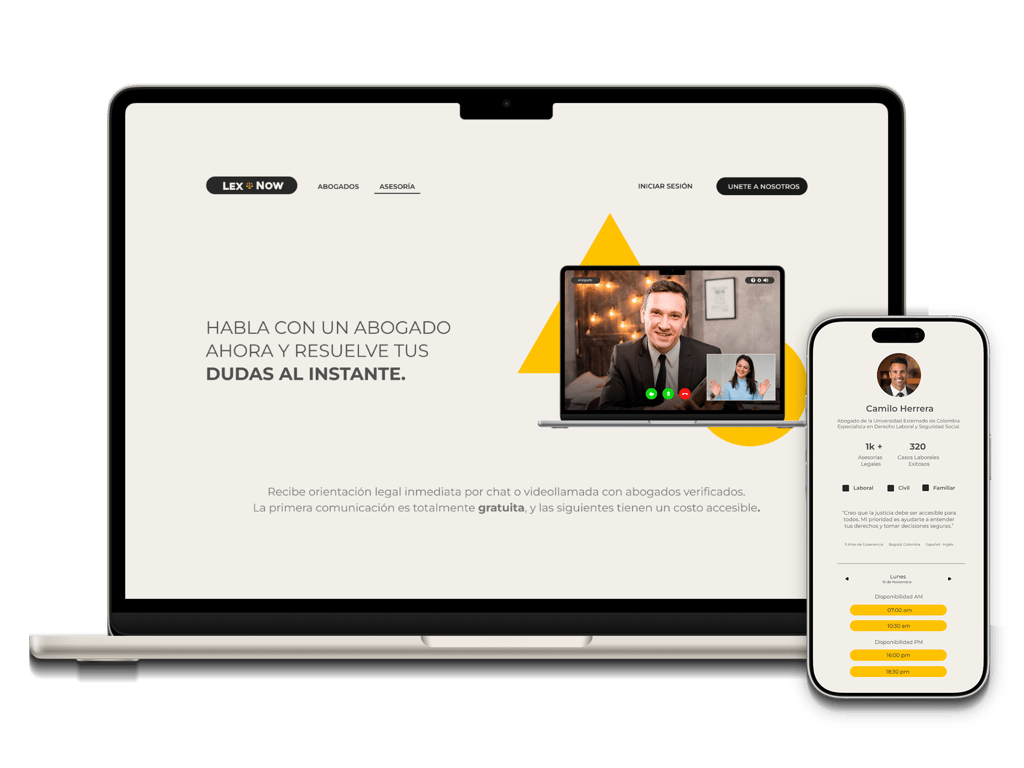
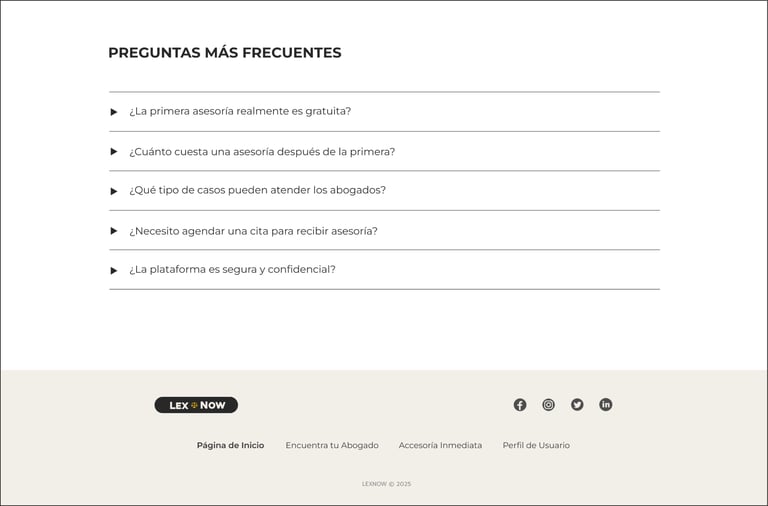
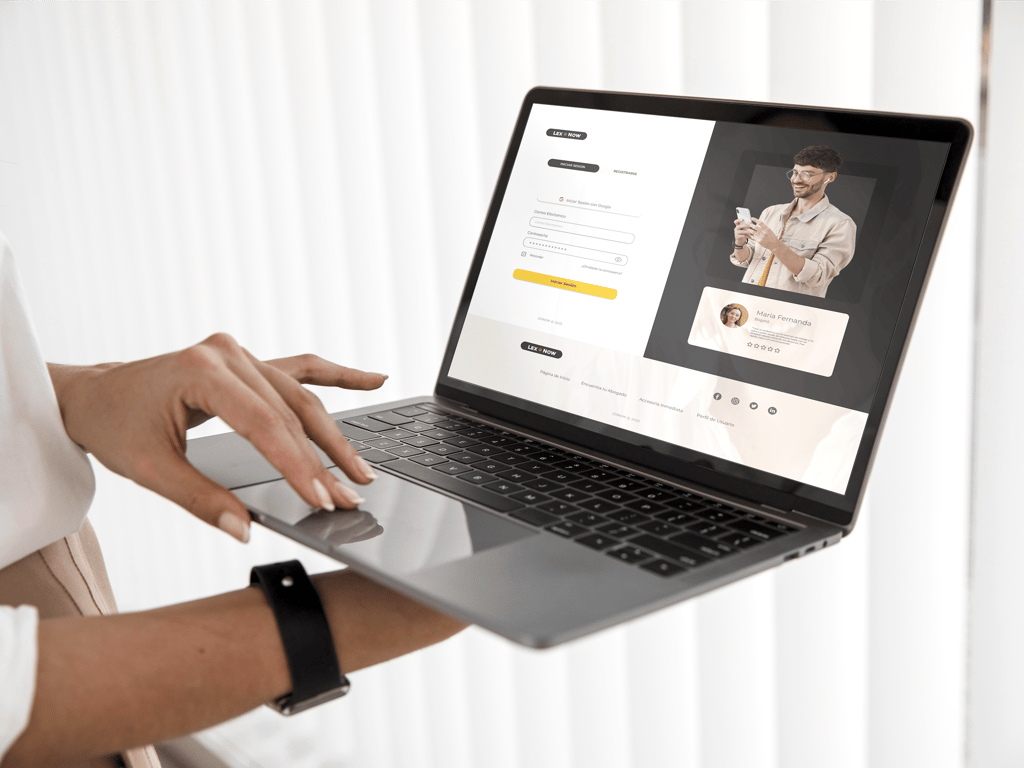
A high-fidelity prototype was developed, integrating text, imagery, colors, and visual components consistent with the platform’s identity. This helped create a sober and professional harmony capable of conveying trust and calm to users during moments of stress and uncertainty.
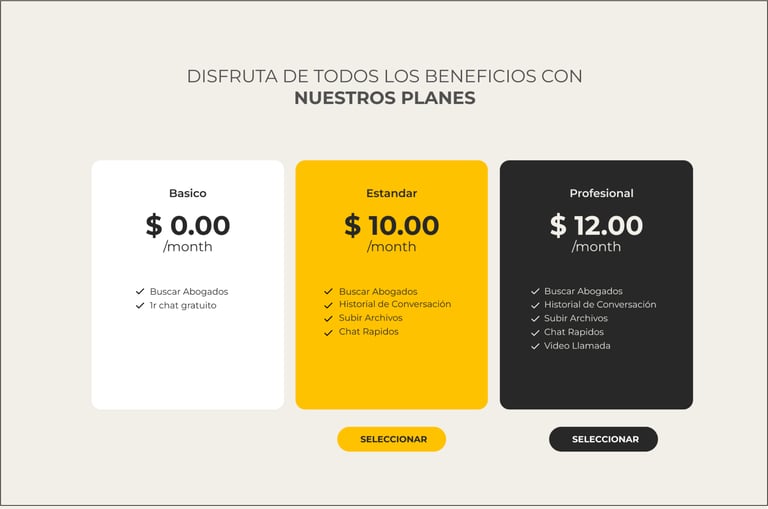
Additionally, based on prior analysis (usability study), identified issues were addressed, improvements were made to button size and visual hierarchy, and the information layout was optimized to enhance user understanding and navigation.
An option was added that allows users to describe their case in a text field, enabling an AI-powered system to identify the appropriate area of law and recommend the most suitable lawyers for the situation.
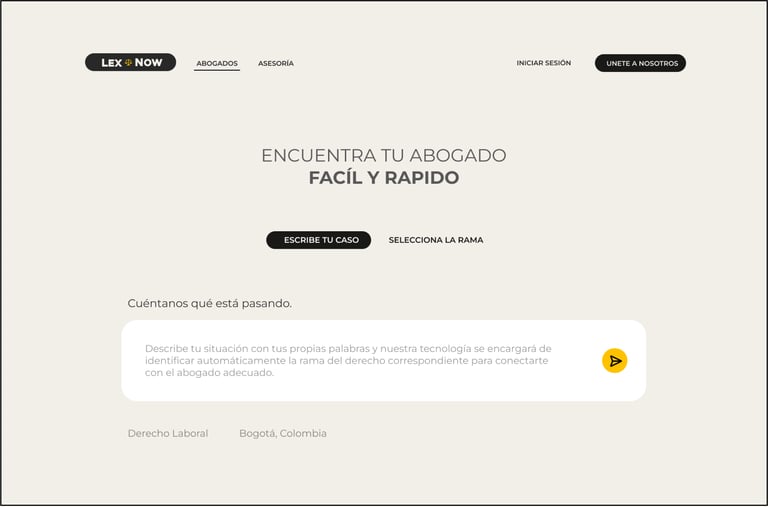
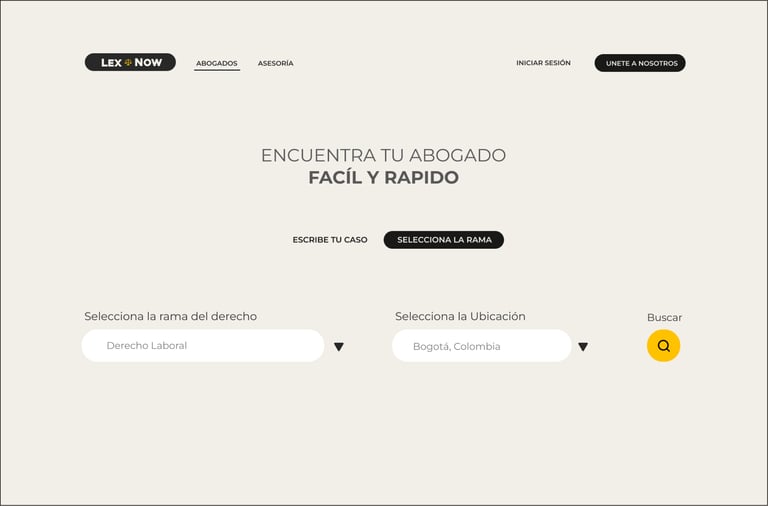
An option was added that allows users to describe their case in a text field, enabling an AI-powered system to identify the appropriate area of law and recommend the most suitable lawyers for the situation.
CONCLUSION
INTRODUTION
THE USER
PROTOTYPE
THE DESIGN
CONCLUSION
V
This project made it possible to gain an in-depth understanding of users’ needs, emotions, and frustrations when facing a legal situation, especially when they lack immediate guidance and prior legal knowledge. Through user research and the analysis of critical pain points, clear opportunities were identified to simplify access to legal assistance, reduce uncertainty, and build trust from the first interaction with the platform.
The solution design focused on delivering a clear, accessible, and human-centered experience, supported by digital tools such as immediate assistance via chat or video call and automatic case classification through artificial intelligence. The high-fidelity prototype incorporated key improvements in visual hierarchy, accessibility, user flows differentiated by user type, and pricing transparency, resulting in a sober and professional interface designed for moments of stress and uncertainty.
Thanks for visiting!
juancos.199@gmail.com
+57 305 324 29 81
Juan Oporto © 2025